

Case Study - Mitigating heat exchanger fouling in refinery sour water systems
A refinery experienced recurring fouling of its Sour Water Stripper feed heat exchangers. Beacon Solutions evaluated an upstream contaminant-removal strategy that stabilized heat transfer, eliminated progressive fouling, and improved overall stripper reliability.
- Client
- Refinery Sour Water System
- Year
- Service
- Separation technology advisory
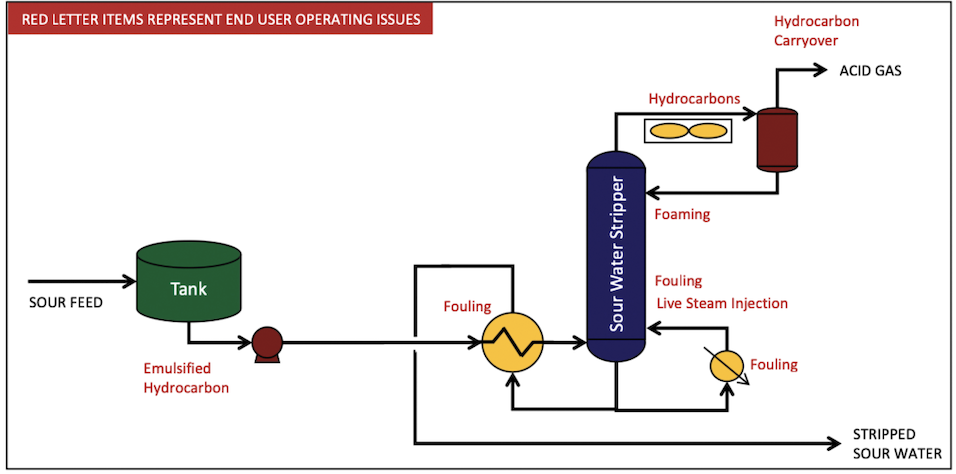
Background
Heat exchanger fouling is one of the most common operational challenges in refinery Sour Water Stripper (SWS) units. Hydrocarbon emulsions and suspended solids carried in sour water can significantly reduce heat transfer efficiency, increase pressure drop, and result in frequent maintenance shutdowns.
This case study examines how improved upstream contaminant removal substantially enhanced the performance and reliability of a refinery sour water system.
The challenge
A refinery experienced recurring fouling of the Sour Water Stripper feed heat exchangers despite conventional gravity separation. Entrained hydrocarbons, emulsified oil, and suspended solids continued to reach the exchanger, resulting in:
- Progressive increase in heat exchanger differential pressure.
- Frequent cleaning and maintenance shutdowns.
- Reduced operating efficiency.
- Increased maintenance costs.
- Potential hydrocarbon carryover to downstream Sulphur Recovery Units.
Engineering solution
The study evaluated a separation strategy combining effective removal of suspended solids and hydrocarbon emulsions before the sour water entered the heat exchanger and stripper system.
The engineering objective was to effectively remove contaminants upstream, rather than depend on long residence time and deal with the consequences of fouling downstream.
Results
Following implementation, operating data demonstrated several significant improvements:
- Heat exchanger differential pressure stabilized almost immediately after start-up.
- Progressive fouling was effectively eliminated.
- Hydrocarbon recovery from the sour water stream increased significantly.
- Filter replacement frequency remained within acceptable operating limits.
- Heat exchanger cleaning shutdowns were substantially reduced.
- Overall Sour Water Stripper reliability improved.
Engineering lessons
This case highlights several important process engineering principles:
- Conventional gravity separation may not adequately remove fine hydrocarbon emulsions or suspended solids.
- Early removal of contaminants upstream of critical equipment can significantly improve plant reliability.
- Monitoring heat exchanger differential pressure provides an effective indicator of fouling performance.
- Integrated solids and liquid–liquid separation can reduce maintenance costs while improving operational efficiency.
- Effective sour water management contributes to improved performance of downstream Sulphur Recovery Units.
What we did
- Separation technology advisory
- Contaminant removal strategy
- Heat exchanger fouling mitigation
- Sour Water Stripper reliability
Adapted from published industry literature. Client identity and proprietary technology references have been omitted.